Ghost Frequencies: The Producers Breaking Into Dead Phone Switching Stations to Hear What the Grid Left Behind
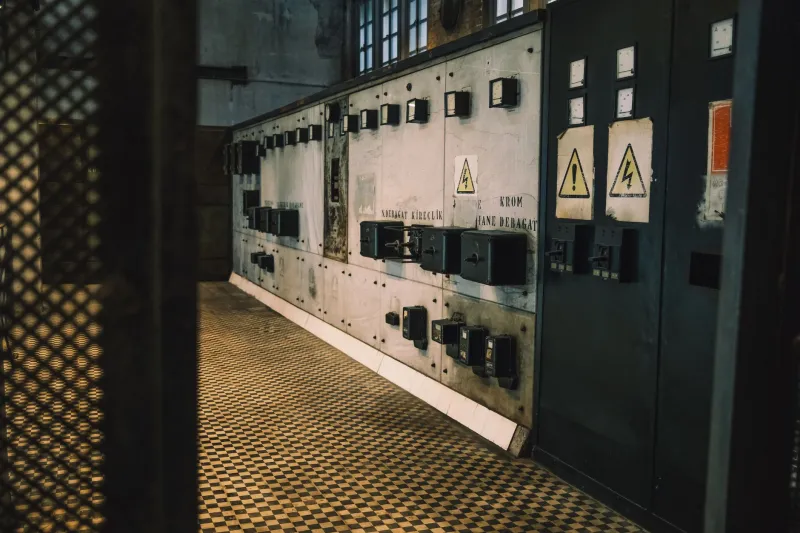
There's a particular kind of silence that lives inside a decommissioned telephone switching station. It's not really silence at all. Walk into one of these concrete bunkers — the ones AT&T and Bell System abandoned across the country over the past few decades — and you'll hear it almost immediately. A low, sustained hum. The kind that sits just below conversation level but above the threshold where your body stops noticing it. For most people, it's background noise. For a specific strain of experimental producer, it's basically a symphony waiting to be mixed.
This is the world of telecom salvage music, and it's weirder, more beautiful, and more technically involved than anything you'd expect from a genre that essentially starts with trespassing.
The Architecture of a Dead Network
To understand why these spaces are so sonically rich, you need a quick crash course in what telephone switching stations actually did. Before digital routing took over, calls were physically connected through electromechanical switches — massive racks of metal contacts, relay coils, and crossbar matrices that clicked, hummed, and cycled in real time as calls moved through the network. A mid-century switching station in a city like Chicago or Detroit might have thousands of these components running simultaneously, all producing their own electromagnetic signatures.
When the digital era made these systems obsolete, a lot of the hardware just... stayed. Decommissioned but not demolished. The buildings were often too expensive to repurpose, too structurally specific to retrofit, and too forgotten to prioritize for teardown. That leaves behind a kind of frozen sonic landscape — equipment that's no longer doing its job but is still, in some cases, still capable of producing a signal when you know how to coax it.
Producers who've been documenting these spaces describe the experience as something between a field recording session and an excavation. "You're not just capturing a room," one Midwest-based producer who goes by the alias Switchhook explained in a recent online forum thread. "You're capturing the residue of millions of conversations that moved through that hardware. That's not poetic license — that's literally what the electromagnetic field is holding."
Contact Microphones and Coil Pickups: The Toolkit
The gear these producers bring into the field reads like a very specific wishlist for someone who's equal parts audio engineer and electrical hobbyist. Contact microphones — the kind that pick up vibration directly from surfaces rather than through air — are essential. So are electromagnetic coil pickups, the same type used to record the hum of CRT monitors and fluorescent ballasts, repurposed here to sweep across relay banks and switch matrices.
Some producers also bring analog tape recorders, specifically to capture the saturation and frequency response characteristics that digital recorders miss at the low end. The argument is that analog-to-analog capture preserves something about the original signal that digital conversion strips out. Whether that's scientifically defensible or producer mythology is genuinely up for debate, but the results speak for themselves on the recordings that have been circulating in underground ambient communities.
The process isn't passive. These producers are actively manipulating whatever hardware still responds — tapping relay contacts, running low-voltage current through dormant switch banks, even using the building's own residual electrical infrastructure as a kind of giant instrument. It's part field recording, part circuit bending, and part genuinely risky electrical experimentation.
What the Recordings Actually Sound Like
If you're picturing something harsh and industrial, recalibrate. The music that comes out of these sessions tends to lean heavily ambient — long, slowly evolving textures built from layered hums, rhythmic clicking patterns from relay sequences, and the occasional burst of what sounds almost like early modem noise but stretched into something genuinely melodic.
The glitch element comes from the imperfect way decommissioned hardware responds to stimulus. A crossbar switch that hasn't been activated in twenty years doesn't behave predictably when you run current through it. It stutters. It partially engages. It produces timing patterns that no sequencer would generate because no sequencer would think to. That unpredictability is exactly what producers in this space are chasing — a kind of mechanical randomness that feels more alive than algorithmic generative music because it's rooted in physical degradation.
Several tracks circulating in ambient and experimental communities online have drawn comparisons to early William Basinski, the Caretaker, and certain corners of the Basic Channel catalog — music that feels like memory itself is degrading in real time. Which, in a very literal sense, it is.
The Legal Gray Zone (and Why Nobody's Really Talking About It)
Let's be direct: most of these sessions are not happening with permission. Decommissioned switching stations are private property. Some are still technically owned by telecom companies, others have passed to real estate holding firms or municipal authorities. Getting legitimate access requires navigating layers of corporate bureaucracy that most producers simply don't have the time or resources to deal with.
The community has a kind of unspoken code about this — don't share locations, don't post identifiable footage, document the audio but protect the site. It mirrors the ethics that have developed in urban exploration communities over decades, with an added layer of concern about protecting the hardware itself. These producers aren't stripping the spaces for parts. They're trying to preserve the sonic record of something that's actively disappearing.
A small number of producers have managed to secure legitimate access through historical preservation organizations or by connecting with former telecom employees who still hold some form of access authority. Those situations are rare enough that they're treated as genuine wins when they happen.
Where This Sound Is Landing
The output from this scene is finding its audience in a few different channels. Bandcamp remains the primary distribution point, with releases typically appearing under genre tags like "field recording," "dark ambient," and "electro-acoustic." A handful of small labels focused on experimental and noise music have started actively seeking out producers working in this space, recognizing that the source material gives the recordings a provenance and conceptual weight that purely studio-generated ambient music can't match.
There's also growing crossover with the broader hauntology movement — music explicitly concerned with the cultural residue of the past and the way defunct technologies carry emotional and historical weight. Telephone switching stations fit that framework almost too perfectly. They're physical monuments to a communication infrastructure that shaped American social life for most of the twentieth century, now sitting silent in the middle of cities that have completely moved on.
The producers working in this space aren't necessarily making music about nostalgia, though. The best of what's coming out of these sessions feels genuinely forward-looking — like someone figured out how to make the past dream in a frequency we haven't quite tuned into yet.
That hum isn't silence. It's a whole record, waiting for someone to press play.