Leave Your Message After the Beep: Why Vaporwave Producers Are Obsessed With Dead Answering Machines
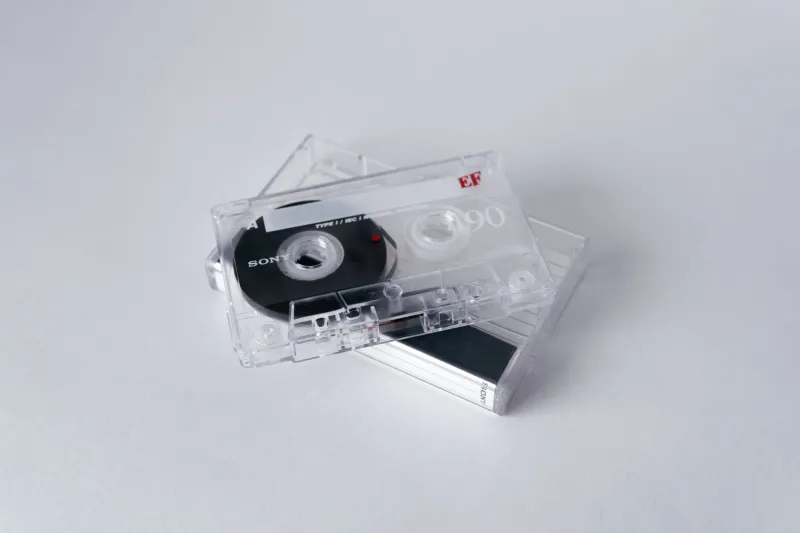
There's a particular kind of silence that lives inside an old answering machine. Not total silence — more like the held breath of a moment that already happened. A hiss. A click. Then a voice from 1994 asking if you made it home okay. For a growing cluster of experimental and vaporwave producers across the US, that moment — frozen in magnetic tape and analog circuitry — is worth more than any sample pack money can buy.
This is the answering machine underground, and it's weirder, warmer, and more emotionally loaded than you'd expect.
Hunting the Dead Tech
Produce with enough intention and you start to crave textures that software just can't fake. That's the consensus among the producers quietly building a subculture around obsolete telecommunications hardware. They're combing Goodwill aisles in Ohio, bidding on estate sale lots in Florida, and trading cassette tapes from old answering machine models on niche Discord servers. The goal? Raw audio artifacts — dial tones, hold music fragments, robotic outgoing message voices, and the occasional deeply personal voicemail that nobody ever deleted.
Producer and collector Marcus Tillman, who records under the alias Pale Signal out of Atlanta, describes the appeal in pretty simple terms. "There's a frequency in those old recordings that you cannot replicate digitally," he says. "The tape compression, the phone line degradation — it's already processed in this beautiful, broken way. I'm not adding lo-fi to it. It already is lo-fi."
Tillman has amassed over 40 answering machines since 2019, ranging from the iconic AT&T 1337 to obscure Radio Shack models that barely anyone remembers. He runs each machine through a signal chain, records the outputs directly into his DAW, then layers the results with slowed-down jazz samples and synthetic pads. The result sounds like a memory you're not sure you actually have.
The Vaporwave Connection
Vaporwave as a genre has always been about hauntology — the idea that certain cultural artifacts carry a ghostly emotional weight precisely because they belong to an era that no longer exists. Early vaporwave artists like Macintosh Plus and Saint Pepsi built entire aesthetic worlds out of smooth jazz loops, elevator music, and the visual language of early internet design. The answering machine fits that lineage perfectly.
Think about it: the answering machine is maybe the most emotionally loaded piece of dead technology in American domestic life. It captured voices at their most unguarded — quick check-ins, forgotten arguments, birthday messages from people who are gone now. It existed in that strange in-between space of communication, not quite a letter, not quite a conversation. And the audio quality? Compressed, tinny, warm in all the wrong places. It's basically a vaporwave aesthetic generator that also happened to sit on your kitchen counter.
Producer Elise Fontaine, who goes by Soft Hold and is based in Portland, has built her entire production identity around this idea. Her 2023 EP Please Hold for the Next Available Feeling runs almost entirely on answering machine source material — outgoing messages pitched down and looped into bass tones, dial-up connection sounds chopped into rhythmic sequences, and a real voicemail (with permission) from a stranger's estate sale tape forming the emotional centerpiece of the closing track.
"I think people hear those sounds and feel something they can't quite name," Fontaine says. "It's not nostalgia exactly, because a lot of listeners are too young to have really used answering machines. It's more like... inherited nostalgia. The sadness of a time you missed."
The Tape Archaeology Problem
Of course, working with found audio from answering machine tapes isn't without its complications. The obvious one is consent — those messages were never meant to be heard by strangers, let alone remixed into ambient electronic music. Most producers in this space have developed their own ethical frameworks around it. Some only use clearly non-personal outgoing messages. Others seek out tapes where the original owners are verifiably deceased and the content is benign. A few have made it a practice to reach out to families when possible.
"I found a tape once with about thirty messages on it, spanning maybe two years," says Tillman. "It was a whole story. I listened to it once, felt incredibly weird about the whole thing, and put it back in the machine. Some stuff shouldn't get remixed. You develop a sense for it."
Fontaine takes a similar line. "I use a lot of outgoing messages — the robot voices, the factory-default greetings, the weird musical hold tones some machines had. That stuff feels fair game. The personal ones, I'm very careful."
Beyond ethics, there's the pure technical challenge of working with degraded media. Tapes warp, oxide sheds, motors fail. Part of the skill set in this niche is knowing how to coax playback out of a machine that hasn't run since the Clinton administration. YouTube repair tutorials, vintage electronics forums, and the occasional local repair shop are all part of the workflow.
The Sound Nobody Else Has
What makes all of this effort worthwhile — beyond the obvious aesthetic appeal — is exclusivity. In an era when every producer on the planet has access to the same sample libraries, the same VST plugins, the same royalty-free packs, the answering machine hunters are working with source material that is genuinely one-of-a-kind. No two tapes are the same. No two machines produce identical artifacts.
That scarcity translates directly into sonic identity. Soft Hold's music sounds like nothing else on Bandcamp right now. Pale Signal's productions have a warmth and weirdness that listeners consistently describe as impossible to place. That's the whole point — sounds that exist nowhere in the digital ecosystem because they were captured by technology that died before the digital ecosystem existed.
There's also a community forming around this. Small Discords, obscure subreddits, the occasional meetup at a record fair where someone shows up with a box of answering machines and a portable DAT recorder. It's niche in the most genuine sense — not niche as a marketing angle, but niche as in a handful of people who found each other across the internet because they all independently fell in love with the same dead technology.
The Beep as a Beat
Maybe the most purely musical discovery in this whole movement is the answering machine beep itself. That tone — usually somewhere around 1000 Hz, clipped and slightly distorted by cheap speaker components — turns out to be an extraordinarily useful rhythmic and melodic element when you start treating it as an instrument rather than a signal.
Producers are pitching it down into sub-bass territory, chopping it into syncopated hi-hat patterns, layering multiples of it at different pitches to create chord clusters. The beep, that most mundane of sonic punctuation marks, has become a secret weapon.
"It's the most recognizable sound in American domestic life from like 1985 to 2005," Fontaine says with a laugh. "Everyone knows it. Everyone has a memory attached to it. When you bury it in a track, something in the listener's brain lights up even if they can't identify what they're hearing. That's powerful."
That's really the whole thesis of this movement, distilled down: the sounds we stopped paying attention to are the ones carrying the most emotional freight. The answering machine wasn't just a device. It was a container for human connection, anxiety, love, and loss — all compressed onto a cassette tape, waiting for someone with a decent microphone and a DAW to finally hear what it was holding.
Leave your message after the beep. Someone's listening now.