Dead Malls, Live Frequencies: Why Producers Are Recording Inside America's Most Haunted Retail Ruins
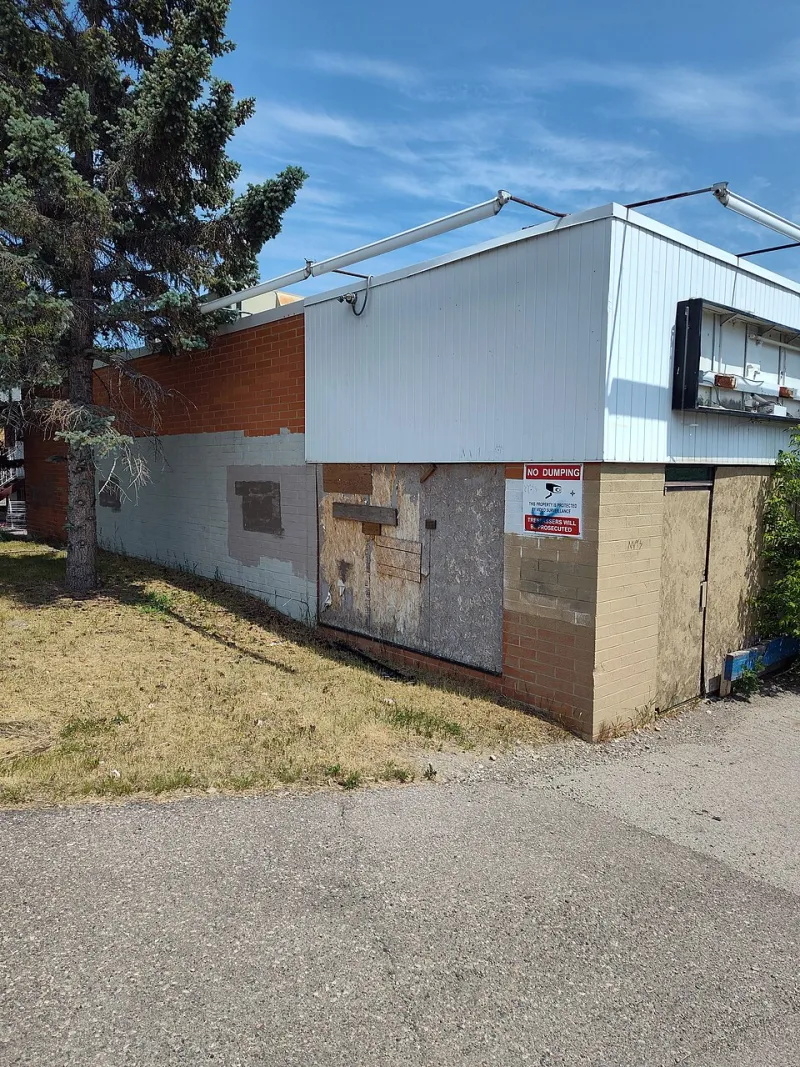
Photo: CnekYT, CC BY-SA 4.0, via Wikimedia Commons
There's a particular kind of silence that lives inside a dying mall. It's not actually silence at all. Lean in close and you'll catch the nervous tick of a fluorescent tube fighting its own extinction, the low mechanical exhale of an HVAC system that nobody's bothered to shut off, the faint drip of water finding its way through a ceiling tile that gave up years ago. To most people, it's just decay. To a growing wave of electronic producers across the US, it's a goldmine.
Call it dead mall music. Call it liminal ambient. Call it whatever you want — the producers doing it are less concerned with genre tags and more obsessed with texture. Specifically, the kind of texture you simply cannot fake inside a studio, no matter how many plugins you stack.
The Acoustics of Abandonment
Here's what makes a shuttered mall so sonically strange: it was never designed to be empty. These buildings were engineered to swallow crowds — to diffuse the noise of thousands of sneakers squeaking on polished floors, to absorb the constant churn of muzak and register beeps and escalator hum. Strip all that away, and the architecture turns on itself. Every footstep becomes a conversation with the ceiling. A single dropped coin echoes like a gunshot in a canyon.
Producers who've worked in these spaces talk about it almost reverently. The reverb tails in an empty anchor store can stretch four, five, six seconds naturally — something that would cost serious money to replicate digitally and still wouldn't feel quite right. There's a liveness to it, a breathing quality, that algorithmic reverb just doesn't capture.
Beyond the acoustics, there's the machinery. Malls that are partially operational — still running skeleton utilities even as stores sit vacant — are particularly rich. Failing fluorescent ballasts produce a low-frequency buzz that sits right around 60Hz, sometimes drifting in pitch as the tubes deteriorate. It's an imperfect drone, alive and unstable in a way that a synthesized tone never is. Defunct escalators, elevator mechanisms, and the remnants of fountain pump systems all contribute their own mechanical voices to the mix.
Lo-Fi's Forgotten Cousin
The lo-fi aesthetic has spent years celebrating the warmth of imperfection — vinyl crackle, tape hiss, the ambient noise of a coffee shop bleed through cheap headphones. Dead mall recording takes that instinct somewhere darker and stranger. Where lo-fi tends toward comfort and nostalgia, the sounds pulled from abandoned retail spaces carry something heavier: a melancholy that's specifically American, specifically tied to the post-consumer landscape of the 2000s and 2010s.
For a certain generation of producers, these malls are loaded with cultural memory. The food court where you killed entire Saturdays as a teenager. The Sears anchor that felt permanent as a mountain until it absolutely wasn't. Sampling these spaces isn't just an acoustic choice — it's an act of archiving something that's disappearing in real time. There's an urgency to it.
That emotional weight translates directly into the music. Ambient tracks built from dead mall recordings tend to carry a specific kind of dread — not horror-movie dread, but something quieter and more unsettling. The sound of a world that kept running long after anyone was paying attention.
The Field Recording Setup
Producers getting into this space are working with everything from high-end stereo field recorders to modded binaural rigs to contact microphones pressed directly against support columns and metal grating. The contact mic approach in particular has become a favorite technique — it picks up structural vibrations that no traditional microphone would catch, turning the building itself into an instrument.
Some producers are going further, setting up extended recording sessions that run for hours, capturing the full arc of a space's ambient behavior across different times of day. The way light changes in a skylit atrium affects temperature, which affects the building's mechanical systems, which affects the soundscape. Morning versus afternoon in a half-dead mall can sound like two completely different compositions.
Editing and arrangement then becomes its own creative challenge. You're working with material that has its own internal logic — rhythms created by dripping water or flickering lights that don't conform to any grid. The most interesting producers working in this space are leaning into that friction rather than fighting it, letting the building dictate tempo and structure in ways that feel genuinely alien compared to traditionally sequenced electronic music.
Glitch as Architecture
The industrial and glitch communities have taken particular notice. There's a long tradition in both genres of treating malfunction as music — circuit-bent toys, corrupted audio files, hardware pushed past its operating limits. A decaying mall is essentially that philosophy at architectural scale. The whole building is glitching. The lights are glitching. The infrastructure is glitching. You're just there to document it.
Some producers are processing their mall recordings through granular synthesis, stretching and fragmenting the source material until the original space is barely recognizable — just a smear of frequency and texture that retains the emotional signature of the room without giving away its origin. Others are keeping things raw and minimal, letting the recordings speak almost unedited, trusting that the spaces are weird enough to carry a track on their own.
Both approaches are working. The output is landing everywhere from Bandcamp ambient pages to experimental club nights where the line between installation art and DJ set has always been blurry.
Access, Ethics, and the Gray Zone
It's worth being real about the practical side of this: most of these recordings are happening without formal permission. Abandoned malls exist in complicated legal and ownership gray zones — some are in active bankruptcy proceedings, some are partially owned by municipalities, some have been bought by developers who haven't done anything with them yet. Getting in usually means finding an unlocked service entrance or a security gap, which carries real risk.
Some producers have started pursuing legitimate access, reaching out to property managers or local preservation groups who are often more receptive than you'd expect — especially when the pitch is artistic documentation rather than trespassing. A few dead mall recording projects have actually been welcomed by building owners who appreciate the idea of their property being preserved sonically before demolition.
However it happens, the instinct driving it feels genuine and worth paying attention to. These spaces are vanishing fast. The sounds living inside them are specific, irreplaceable, and deeply tied to a particular American moment. Someone should be capturing them — and the producers doing it are making the case that music is the right medium for that kind of memory work.
The mall is dead. Long live the frequencies.