Spin Cycle Sorcery: The Producers Discovering Their Favorite Studio Is a Laundromat
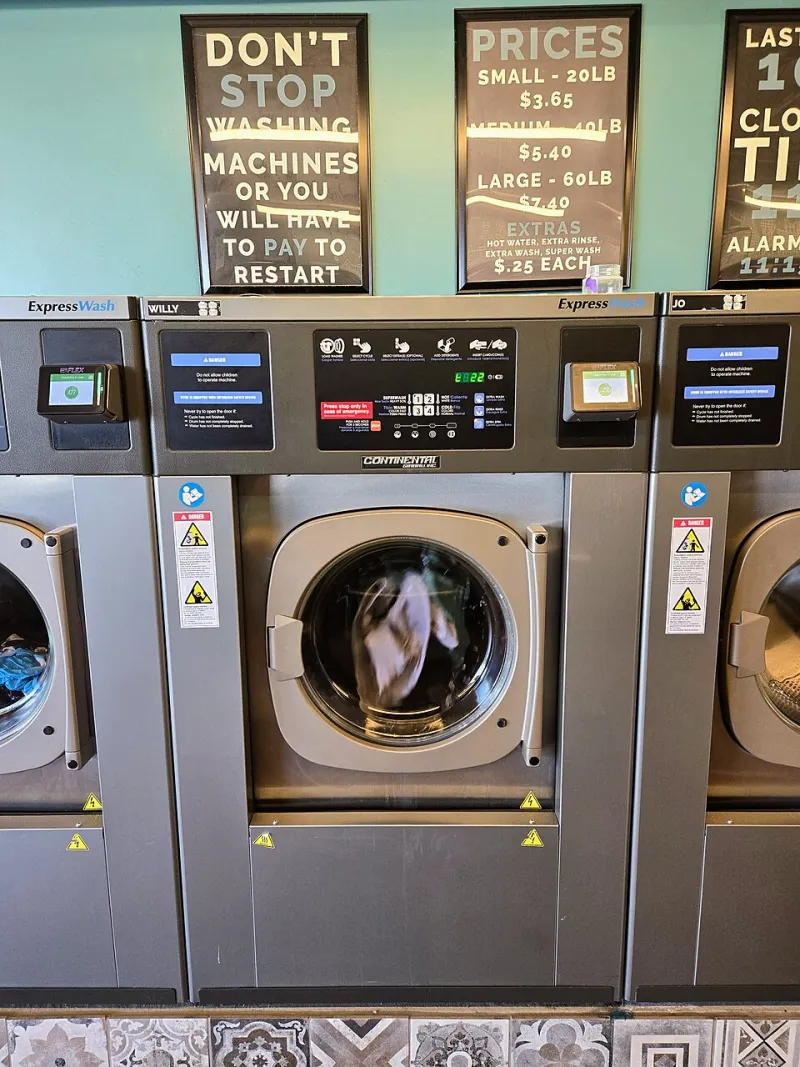
Photo: Baron Maddock, CC BY 4.0, via Wikimedia Commons
There's a moment, usually around the third spin cycle, when the noise of a busy laundromat stops being background and starts being music. The low, resonant hum of a washer settling into its rhythm. The percussive tumble of sneakers banging against a dryer drum. The metallic clank of a coin slot, the hiss of steam, the overlapping frequencies of six machines running at once. Most people have their earbuds in by then. A small but growing number of producers are pulling their earbuds out — and pressing record.
Welcome to one of the more unexpected corners of the underground electronic scene right now: laundromat ambient techno. It's exactly what it sounds like, and it's way harder to dismiss than you'd expect.
Why a Laundromat, Though?
It's a fair question. There are plenty of industrial spaces producers have raided for raw material — factories, subway tunnels, hospital corridors. But the laundromat has something most of those places don't: rhythm that evolves.
A dryer doesn't just hum. It cycles through phases — a slow, heavy rotation at the start, building speed, then the irregular thud of clothes redistributing weight, then that familiar mechanical deceleration as the timer winds down. Stack three or four of those cycles on top of each other, each one slightly out of phase with the others, and you've got a polyrhythmic texture that most drum machines would struggle to replicate.
Producers who've spent time recording in laundromats talk about this a lot — the way the space essentially composes itself over time. You don't need to arrange the sounds. You just need to be patient enough to capture them.
"The first time I went in with my H5 [Zoom recorder], I thought I'd grab a few samples and bounce," says Marcus Webb, a Chicago-based producer who releases ambient electronic work under the alias Tumblr Dry. "Four hours later I'm still there, and the woman at the counter is giving me the look. But I had this forty-minute recording that was just... alive. Every section was different. It was like the machines were improvising."
The Sonic Palette Is Richer Than You Think
Break it down and the laundromat is basically a percussion section, a drone section, and a texture section all running simultaneously.
The percussion lives in the dryers — specifically the heavy-duty commercial units that most laundromats in lower-income urban neighborhoods still run. Those machines have a particular weight to their tumble that cheaper residential dryers just don't replicate. Producers have started specifically seeking out older machines, the kind with worn drum bearings that create an irregular, slightly off-kilter knock. That imperfection is the whole point.
The drone comes from the washers. Front-loaders in particular generate a sustained, mid-frequency hum during their spin cycle that sits surprisingly well in a mix. Pitch-shift it down a few semitones and you're somewhere between a bass pad and a foghorn. Layer two or three of those recordings and you've got a chord.
Then there's the texture — the ambient wash of the whole room. Fluorescent lights buzzing. The muffled conversations of people waiting. Change machines dispensing quarters. Water moving through pipes in the walls. This stuff is almost impossible to manufacture artificially, and it's what gives laundromat recordings their sense of place, that quality producers describe as making a listener feel like they're inside something rather than just listening to it.
From Raw Recording to Finished Track
The production process varies widely depending on who you ask, but a few approaches have emerged as common starting points.
Some producers treat the laundromat recordings as a foundation — a bed of texture that gets heavily processed and pitched before anything else is added. Granular synthesis is popular here; feeding a thirty-second dryer loop into a granular processor and stretching it across four minutes gives you something that sounds like it was recorded on another planet while still retaining that mechanical DNA.
Others take a more minimal approach, doing almost nothing to the original recordings beyond trimming and arranging them. Naomi Castillo, a Brooklyn-based sound artist who performs as Rinse & Repeat, falls into this camp. "I'm not trying to hide what it is," she says. "The whole point is that you can hear it's a laundromat. That's where the emotional weight comes from — people have memories in those spaces. It's not glamorous. It's Tuesday night, you're broke, you're waiting. That feeling is in the recording."
Castillo's most-streamed release, a 22-minute piece called Delicate Cycle, uses almost no synthesis at all. The entire track is built from recordings made at a single laundromat in Bushwick over the course of three visits. It's been described in reviews as "the most relaxing thing I've heard all year" and "genuinely unsettling in the best possible way" — sometimes in the same review.
The Community Is Small but It's Growing
This isn't a movement with a manifesto or a scene with a defined geography. It's more like a loose network of producers who found each other online after independently arriving at the same weird idea. There are Discord servers, a handful of dedicated Bandcamp tags, and at least one monthly listening session in Portland where attendees are encouraged to bring laundry.
What's interesting is the demographic spread. Field recording has historically skewed toward a very particular kind of serious, academic sound artist. Laundromat ambient techno is pulling in beatmakers, ambient producers, noise artists, and people who just got into modular synthesis last year. The barrier to entry is low — you need a halfway decent recorder and a few dollars in quarters — and the results tend to be immediately interesting even for beginners.
There's also something genuinely democratic about the source material. Laundromats are neighborhood institutions, especially in cities, and they're disproportionately located in working-class communities. Using them as recording spaces is, for some producers, a conscious choice — a way of making music that's literally rooted in the textures of everyday American life rather than imported from somewhere more exotic.
What It Sounds Like on the Floor
If you haven't heard any of this yet, the easiest entry point is probably searching Bandcamp for tags like "field recording," "laundromat," or "found sound ambient." What you'll find ranges from genuinely gorgeous — shimmering, patient music that rewards headphone listening — to rough experiments that are more interesting as concepts than as finished tracks. That range is part of the appeal.
The best of it sits in a space that's hard to categorize, which is kind of the whole point. It's too rhythmic to be pure ambient. Too textural to be techno. Too grounded in real space to be purely electronic. It sounds like the world processed through a very particular filter — mechanical, repetitive, oddly warm.
The laundromat was always making music. Somebody finally decided to remix it.