Always Open, Always Humming: The Producers Who Found Their Sound Under Fluorescent Lights
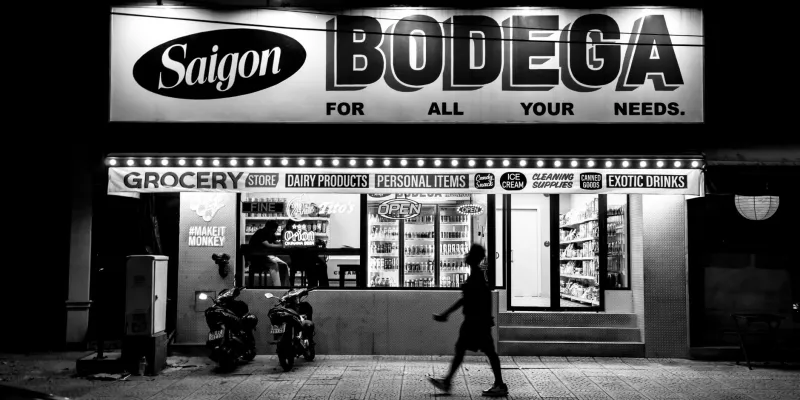
It's 2:47 AM. The parking lot outside is empty except for a single car idling under a broken street lamp. Inside, the clerk is staring at a phone screen, a hot dog has been rotating on the roller grill for what feels like geological time, and somewhere above the chip aisle, a fluorescent tube is doing that slow, almost imperceptible flicker that makes you feel like reality is buffering. For most people, this is just a pit stop. For a specific breed of experimental producer, this is the studio.
The 24-hour convenience store has quietly become one of the most talked-about sonic environments in underground electronic music. Not for any single dramatic sound, but for the sum of all its parts — a dense, layered ambient hum that never fully resolves, never fully rests, and somehow captures something deeply American about loneliness, routine, and the strange comfort of a place that's always, always on.
The Frequency Nobody Talks About
Ask any producer who's spent time recording in these spaces and they'll mention the same thing first: the lighting. Standard fluorescent fixtures in commercial retail environments emit a consistent electrical hum, typically hovering around 60Hz in the US — a byproduct of the alternating current they run on. On its own, it's easy to tune out. Layered with the low-frequency rumble of refrigerator compressors running along the back wall, the distant whirr of a slushie machine, and the occasional mechanical click of an automatic door sensor, it creates something genuinely complex.
Producer and sound designer Marcus Veil, who operates out of Portland and releases under the alias Cold Shelf, has been building tracks around convenience store ambience for the better part of three years. "There's this phenomenon where all those machine frequencies start interacting with each other," he explains. "You get these unintentional beating patterns — like two slightly detuned oscillators creating a wobble. I've recorded back-wall refrigerator units that produce accidental chords. It's not something you can fake in a DAW. You have to go find it."
Veil's 2023 EP Aisle 4 Forever — released quietly on Bandcamp and since racked up a cult following across multiple lo-fi and vaporwave communities — was recorded almost entirely in a single 7-Eleven in Northeast Portland over the course of six overnight sessions. He brought a mid-side stereo rig, a contact mic, and a field recorder. The clerk, he says, barely looked up.
Liminal Space as Aesthetic Choice
The timing here isn't accidental. The concept of liminal spaces — those transitional, between-worlds environments that feel simultaneously familiar and unsettling — exploded into mainstream internet culture over the last several years. Empty hallways, abandoned pools, backrooms. The 24-hour convenience store slots neatly into this taxonomy. It exists outside of normal time. It serves people who are between things: between sleep and waking, between one part of the night and another, between sober and not.
That psychological texture is exactly what vaporwave and lo-fi producers have been chasing for years through entirely synthetic means. Artists like Macintosh Plus and early 猫 シ Corp built entire aesthetics around that feeling — muzak slowed to a crawl, corporate environments rendered dreamlike, consumerism as a kind of haunted nostalgia. The convenience store is a living version of that concept. It doesn't need to be processed to feel surreal. It already is.
"Vaporwave has always been about repurposing the mundane," says Delia Okafor, who records as Neonprice and has been vocal in online producer forums about her field recording practice. "The joke was always that it's elevator music you can actually feel something about. But the real thing — going into these spaces with a mic — hits different. You're not sampling a memory of consumerism. You're inside the thing itself, at 3 AM, and it's genuinely weird in there."
Okafor's recent project Rollergrill Reverie leans into this hard. She layered raw convenience store recordings with heavily processed synthesizers tuned to match the drone frequencies she captured in the field, creating tracks that blur the line between found sound and composition. The effect is disorienting in the best possible way — like the store itself is trying to sing.
Technique: Getting the Sound Without Getting Kicked Out
There's an obvious practical challenge here. You are, after all, standing in someone's place of business at an unusual hour with recording equipment. Producers who've navigated this successfully tend to share a few common strategies.
First, transparency goes a long way. Several producers interviewed for this piece mentioned simply asking the overnight clerk if it was okay to record ambient sound for a music project. The answer, more often than not, is a shrug and a "sure." Late-night convenience store employees are not, generally speaking, deeply invested in policing acoustic documentation.
Second, gear matters less than you'd think. Some of the most-cited recordings in these communities came off nothing more than a Zoom H5 or even a high-end smartphone with a decent external mic app. The environment is doing the heavy lifting. What you're after is fidelity to the space, not technical perfection.
Third — and this is the one that comes up constantly — you need to stay long enough for the space to settle around you. The first twenty minutes of any recording session in a public space are full of self-consciousness, ambient noise that responds to your presence, small adjustments. The real material comes when the store forgets you're there. When the compressors cycle back on and the lights resume their flicker and the slushie machine starts its low moan and none of it is performing for anyone anymore.
Why It Resonates Right Now
There's something specifically American about the 24-hour convenience store as a cultural artifact. It exists as a monument to the idea that need — or want, or boredom — doesn't keep business hours. It's democratic in a particular way: everybody ends up there eventually, usually at their least composed. The CEO buying Red Bull at midnight and the overnight construction worker grabbing a breakfast sandwich at 5 AM are, briefly, occupying the same fluorescent-lit purgatory.
For electronic music communities that have long been drawn to the aesthetics of late capitalism, of corporate spaces rendered strange, of isolation as ambient texture, the convenience store is almost too perfect a subject. It's everywhere. It's always on. And it sounds, if you stop and actually listen, like nothing else on earth.
Marcus Veil puts it simply: "Every time I go in there with a mic, I come out with something I couldn't have made on my own. The store writes half the track. I just show up."
If you haven't listened to anything built around these recordings yet, find a copy of Aisle 4 Forever and put it on around midnight. Then maybe take a drive to your nearest 24-hour spot. Grab a drink. Stand near the back wall for a minute. Listen to what the coolers are doing.
You'll hear it.