Ring Once for Vibes: The Producers Digging Up Rotary Phones for Lo-Fi's Next Chapter
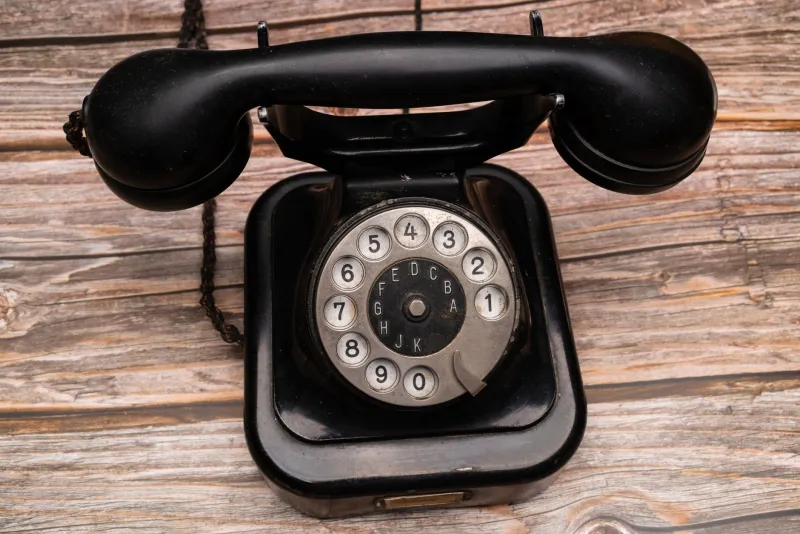
There's a specific kind of sound that lives inside a 1960s rotary phone. It's not the ring — though that's part of it. It's the mechanism. The satisfying, almost violent snap of the dial being pulled back. The slow, whirring return. The tiny percussive tick of each number clicking into place. It's mechanical music, and a growing community of producers across the US has figured out that it's also incredibly, unexpectedly perfect raw material for lo-fi, vaporwave, and ambient production.
Flea markets, estate sales, eBay rabbit holes at 2am — that's where this story starts. And it ends somewhere far more interesting.
The Hunt Is Half the Point
Ask any producer deep in this world and they'll tell you the same thing: finding the phone matters as much as sampling it. Marcus Webb, a Chicago-based lo-fi producer who releases under the name Copper Wire Dreams, has been collecting vintage telephone hardware for about three years. His apartment doubles as an informal museum of Bell System relics — Western Electric 500s, slim-line wall units from the late 70s, a handful of early touch-tone models still in their original boxes.
"There's a tactile quality to these things that you just don't get anywhere else," he says. "Every model sounds slightly different. The dial return on a 1955 Western Electric has this long, smooth decay that I've never been able to replicate with a plugin. When you pitch it down two octaves and layer it under a boom-bap kick, it sounds like something from another dimension."
Webb isn't alone. Online communities dedicated to both telephone collecting and music production have started overlapping in unexpected ways. Subreddits and Discord servers that were once strictly about vintage hardware preservation now regularly feature threads titled things like "best models for sampling" and "how to mic a rotary dial properly."
What's Actually in There Sonically
The appeal makes more sense once you break down what these phones are actually generating acoustically. A rotary dial produces at least three distinct sound events: the initial pull (a sharp, woody click), the whirring rotation (a rhythmic, almost melodic buzz), and the return snap (a heavier mechanical thud). Recorded up close with a decent condenser mic, each of these becomes a usable percussive or textural element on its own.
Then there's the ringer itself. Pre-electronic phones used actual physical bells struck by a small hammer — a sound that's both bright and slightly harsh in a way that digital recreations never quite nail. Sliced, pitch-shifted, and run through a vintage tape emulator, those bell strikes can become hi-hats, melodic stabs, or ambient tones depending on how you treat them.
And don't sleep on the handset. The carbon microphone capsules inside older receivers have a famously compressed, mid-heavy frequency response that was designed specifically to make voices intelligible over noisy analog lines. Producers are now using those capsules as actual recording devices — capturing vocals, synths, and even other samples through them to get that authentically degraded telephone sound without any post-processing tricks.
"I recorded an entire EP's worth of vocals through a 1940s handset," says Priya Nair, a Brooklyn-based experimental producer whose project Static Honey sits somewhere between vaporwave and musique concrète. "The capsule rolls off everything below about 300Hz and everything above 3kHz. What's left is this perfect, slightly broken mid-range that sounds like a memory of a voice rather than an actual voice. It's haunting in the best way."
Layering the Past Into Something New
The production technique that keeps coming up in conversations with these artists is layering — specifically, the way telephone sounds interact with more conventional electronic elements. A rotary dial whir pitched down becomes a bass texture. A busy signal chopped into sixteenth notes becomes an arpeggiated melody. A dial tone — that steady 440Hz hum — is literally the musical note A, which means it drops cleanly into almost any key without retuning.
That last detail is something producers get genuinely excited about. "The dial tone is A440," says Webb. "That's concert pitch. It's the note orchestras tune to. Whoever designed the North American phone system either knew exactly what they were doing or got incredibly lucky, because that tone fits into music production like it was built for it."
Nair's approach goes further, treating the entire telephone as a compositional instrument rather than just a sample source. She'll pick up the receiver, dial a number, hang up, redial, let the busy signal run — and record the whole sequence as a performance. "It's almost like playing a really limited synthesizer," she explains. "You have a finite set of sounds, and the art is in how you arrange and layer them."
The Collector-Producer Pipeline
One interesting side effect of this trend is what it's doing to the vintage telephone collecting market. Prices for certain models on eBay and at antique stores have crept up noticeably over the past couple of years, and longtime collectors have noticed new buyers who are clearly more interested in acoustic properties than historical preservation.
This creates some tension in collector communities — purists who want to restore and display these phones versus producers who want to take them apart, mic them up, and run them through Ableton. But plenty of people sit comfortably in both camps, treating the phones as artifacts worthy of care and as instruments worthy of use.
"These things were built to last," says Webb. "Using them isn't disrespecting them. It's the opposite. It's saying they still have something to offer."
Why Now?
The timing of this trend isn't random. Lo-fi and vaporwave as genres have always been obsessed with a particular flavor of nostalgia — not the clean, curated nostalgia of a commercial, but something grittier and more ambiguous. The feeling of a memory you can't quite place. Sounds that feel familiar but slightly wrong.
Vintage telephone hardware delivers that feeling in a way that's hard to manufacture. There's a reason these sounds trigger something in listeners even if they've never used a rotary phone. They've heard these sounds in movies, in old TV shows, in the background of family home videos. They carry emotional weight that purely synthetic sounds can't replicate.
And in a production landscape increasingly dominated by sample packs and AI-generated textures, there's something genuinely countercultural about hunting down a 60-year-old piece of telecommunications equipment, sticking a mic in front of it, and making something new.
The dial tone is calling. A lot of producers are picking up.