Riding the Rails to a New Sound: Why Producers Are Mining Subway Systems for Their Next Big Record
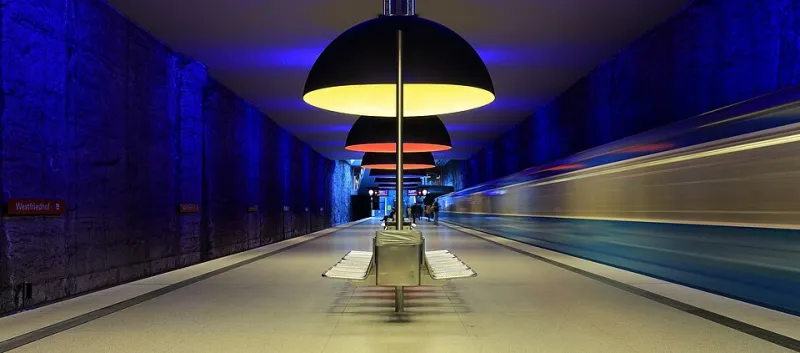
Photo: Martin Falbisoner, CC BY-SA 3.0, via Wikimedia Commons
There's a moment on any given weekday morning — somewhere between the third coffee and the second delayed train — where the New York City subway stops feeling like a commute and starts feeling like a composition. The doors slide shut with a percussive thud. A garbled announcement bounces off tile walls. Somewhere down the platform, a busker's saxophone bleeds into the mechanical groan of a departing C train. For most commuters, it's background noise. For a growing circle of producers, it's source material.
Welcome to the new ambient frontier. It smells like concrete and old pretzels, and it absolutely slaps.
The Field Recorder as Transit Pass
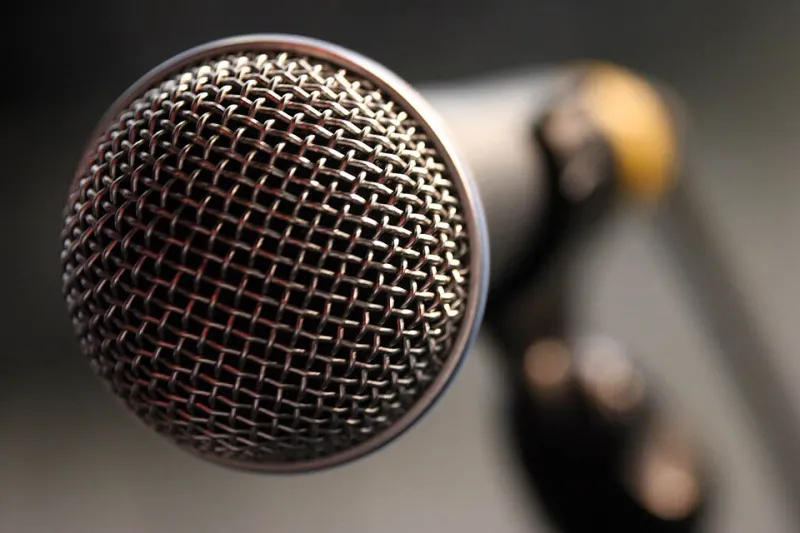
Field recording — the practice of capturing environmental sound outside a traditional studio — has been around for decades. But what's changed recently is where producers are pointing their microphones and, more importantly, why. A new wave of sound designers and electronic artists across the US are treating subway systems not as inconveniences to be endured, but as living, breathing instruments to be studied.
Producers like Chicago-based ambient artist Marcus Weld have been hauling portable recorders onto the Red Line for the better part of three years. "There's a specific frequency the rail makes when a train takes that curve near Belmont," he says. "I've never heard a synthesizer replicate it. It's like the infrastructure is playing itself."
Weld's approach is methodical. He times his sessions around off-peak hours — late night, early morning — when the sonic landscape shifts from chaotic to cavernous. The crowd noise drops away and what's left is something closer to a drone composition: low-frequency hums, distant metallic resonance, the occasional burst of compressed air from a closing door. He layers these recordings with minimal synthesis, letting the transit system do most of the heavy lifting.
Why Transit Sounds Hit Different
Here's the thing about subway audio that makes it genuinely more interesting than a lot of what's sitting in your sample library: it's unpredictable in ways that feel human. A synthesizer follows rules. A 1973 IND rolling stock car on the New York City F line does not.
The irregularity is the point. When Brooklyn-based producer and sound artist Dani Rowe started incorporating subway recordings into her ambient work, she was initially frustrated by how difficult the material was to work with. Timing was inconsistent. Pitches shifted mid-recording. Background conversations bled into what she thought were clean takes. Then she stopped fighting it.
"I realized I was trying to make subway sounds behave like studio sounds," Rowe explains. "Once I let go of that, the whole thing opened up. The bleed, the inconsistency — that's not a flaw. That's the texture."
Her track "Fulton Street, 2:14 AM" — built almost entirely from recordings made at a Manhattan transit hub between midnight and 3 a.m. — has racked up a quiet but devoted following in ambient and experimental circles. The piece layers platform announcement fragments into something that sounds almost melodic, with the mechanical rhythm of a turnstile serving as the track's backbone. It's hypnotic in a way that's hard to manufacture.
Industrial Roots, Modern Branches
This isn't coming out of nowhere. Industrial music has been drawing from urban infrastructure since Throbbing Gristle was making noise in late-70s England. American acts like Einstürzende Neubauten's spiritual descendants in the noise and industrial underground have long treated cities as instruments. But what's happening now feels distinct — less aggressive, more contemplative. Producers are less interested in the violence of urban machinery and more interested in its meditative qualities.
The ambient angle is key. Artists like LA's transit-obsessed producer Kellan Shore describe their subway work as almost documentary in intent. "I'm not trying to make something harsh or confrontational," Shore says. "I want people to hear the Metro and feel the same weird peace I feel at 11 p.m. on a near-empty Blue Line car. That specific kind of urban solitude."
Shore's recent EP, recorded across six LA Metro lines over the course of a year, pairs subway ambience with slow, evolving pads and barely-there percussion. The result is genuinely immersive — less a traditional electronic record and more a sonic portrait of a city in motion.
The Technical Side: Capturing Transit Without Losing Your Mind
For producers curious about jumping into this space, the learning curve is real but manageable. A few things worth knowing before you head underground with a Zoom H5 and big dreams:
Gain staging is everything. Transit environments are dynamically extreme — the quiet of an empty platform can shatter instantly into the full-volume roar of an arriving train. Recording hot enough to capture the quiet moments means you'll clip when the train shows up. Experienced field recorders often run two devices simultaneously at different input levels, then composite in post.
Resonant spaces are your friend. Older stations — think the ornate tile-work of NYC's 86th Street or Chicago's elevated platforms — have acoustic properties that newer construction just doesn't have. The reflections and reverb are natural and complex in ways that take expensive plugins to approximate.
Legal gray areas exist. Transit authorities across the US have varying policies on recording in stations. Many permit it for personal or artistic use; others are murkier. Do your homework before setting up shop on a platform with professional gear. The last thing your ambient record needs is a transit cop cameo.
The Remix Angle: When the City Becomes the Sample
Beyond full ambient compositions, transit sounds are increasingly showing up as samples in more conventional electronic production. That door chime? It's a percussion hit. A platform announcement chopped and pitched? That's a vocal element. The low throb of a tunnel ventilation system? Instant sub-bass texture.
Producers in the beat-making community have been catching on, with transit-sourced samples appearing in everything from lo-fi hip-hop to experimental techno. The appeal is straightforward: these sounds carry context. There's an inherent urban energy baked into a subway recording that you don't get from a preset. Listeners feel it even if they can't articulate why.
"Samples carry memory," Rowe puts it simply. "A subway sample carries everyone's memory. Every person who's ever stood on a platform, stressed about being late, or had a quiet moment in a loud city — that's all in there."
Last Stop: What This Movement Is Really About
At its core, the transit sound movement is about reframing the everyday. The commute you hate, the delays you complain about, the noise you tune out with headphones — it's all sonically rich material that most of us have been conditioned to ignore. These producers are making the case that the real world, in all its chaotic, screeching, announcement-garbling glory, is as valid a source of musical inspiration as any piece of hardware.
The subway isn't just getting you to work. For a certain kind of producer, it's the studio.
And honestly? After hearing what Weld, Rowe, and Shore have pulled out of these tunnels, it might be time to leave the noise-canceling headphones at home for once. You might be sitting in the middle of someone's next record.