Pulse Check: The Producers Turning Hospital Equipment Into the Hardest Beats You've Never Heard
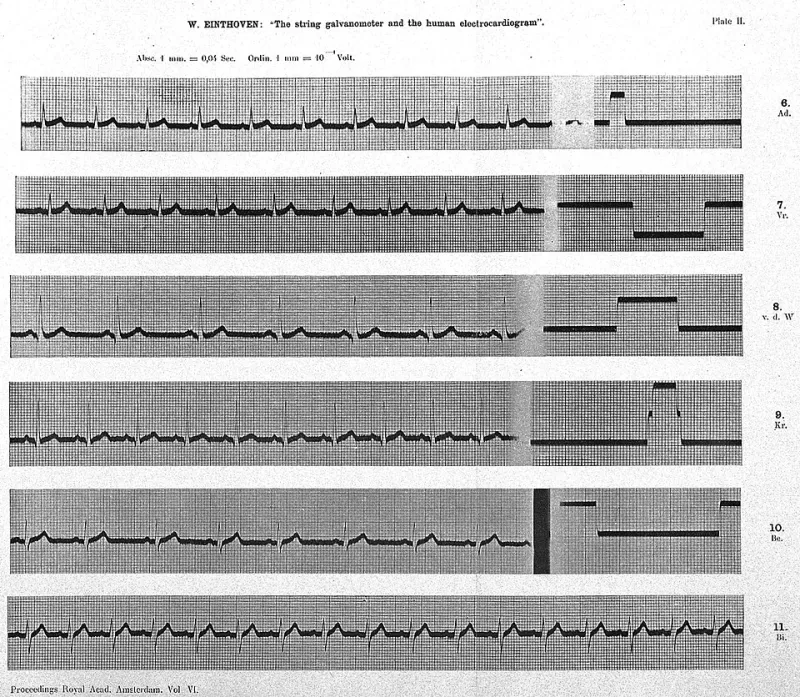
Photo: Unknown, CC BY 4.0, via Wikimedia Commons
There's a moment in any serious producer's journey where the standard sample packs start feeling stale. The 808s, the hi-hat rolls, the synth stabs — they all blur together after a while. So where do you go when the usual toolkit stops surprising you? Apparently, some of the most forward-thinking beatmakers in the US underground are heading somewhere unexpected: the hospital.
Not literally, of course — though a few dedicated sound designers have absolutely shown up with field recorders in clinical settings. What's happening is a broader, quieter movement inside experimental and industrial electronic music circles, where the rhythmic and textural sounds of medical equipment are getting chopped, layered, and dropped into tracks that feel genuinely unlike anything else out right now.
Why Medical Sounds Hit So Hard
Think about what an EKG monitor actually is at its core: a machine engineered for absolute rhythmic precision. Every beep is metronomic. Every spike in that waveform is a real-time data point translated into sound. For a producer obsessed with groove and timing, that's not just interesting — it's almost sacred.
Ventilators bring something different to the table. The mechanical inhale-exhale cycle has this hypnotic, almost meditative quality when you loop it. It's repetitive in a way that feels biological rather than digital, which creates a fascinating tension when you layer it under a hard synth bassline. It breathes. Literally.
And then there's the MRI machine — arguably the crown jewel of the medical sound world for anyone chasing industrial textures. The knocking, clanging, gradient coil sequences that an MRI generates during a scan sound like a noise artist's fever dream. Those sounds are actually produced by rapid changes in magnetic fields, which means what you're hearing is physics made audible. That's wild. Producers working in the noise, ambient, and techno spaces have been gravitating toward MRI recordings specifically because the tonal complexity is so dense — you can pull entirely different frequencies out of the same source depending on how you EQ it.
The Precision Problem (and Why It's Actually a Feature)
One thing that separates medical device audio from most found-sound sources is the engineering intent behind it. These machines weren't designed to be musical, but they were absolutely designed to be precise. A cardiac monitor's alert tones are calibrated to cut through ambient noise and register instantly in a human brain. That psychoacoustic engineering? Producers are exploiting it.
When you drop a processed EKG beep into a mix, listeners react to it on a primal level — even when they don't consciously recognize what they're hearing. There's an embedded urgency in those sounds that decades of hospital dramas and real-life medical experiences have hard-wired into American listeners. That emotional freight doesn't disappear just because the sound got pitched down two octaves and run through a distortion chain. If anything, it gets weirder and more potent.
This is the kind of psychological texture that producers working in the more cerebral corners of electronic music actively hunt for. It's the same instinct that drives people to sample courtroom audio or emergency broadcast tones — that sense of recontextualization where something clinical or institutional gets dragged onto the dance floor and suddenly means something completely different.
How Producers Are Actually Building With This Stuff
The workflow varies pretty widely depending on the producer's background and goals. Some are working with clean field recordings sourced from places like the Freesound Project or medical sound effect libraries, then processing them heavily — granular synthesis, time-stretching, convolution reverb through unusual impulse responses. Others are building custom patches that simulate the rhythmic patterns of medical devices rather than sampling them directly, which sidesteps any potential clearance issues while still capturing the aesthetic.
A few producers in the noise and power electronics adjacent spaces have been more aggressive about authenticity, actually collaborating with healthcare workers or former patients who recorded their own experiences — ICU ambience, dialysis machine cycles, the specific hum of hospital HVAC systems. That approach adds a layer of human context that pure technical sampling can miss.
On the arrangement side, the most effective tracks tend to use medical sounds as structural anchors rather than decorative elements. The ventilator becomes the kick. The EKG rhythm becomes the hi-hat pattern. The MRI drone becomes the pad underneath everything. When it works, the whole track has this eerie internal logic — like the music itself is alive and being monitored.
The Listener Experience: Discomfort as a Design Choice
Let's be honest about something: this music isn't universally comfortable to listen to, and that's completely intentional. For anyone who's spent time in a hospital — either as a patient or sitting beside someone they love — these sounds carry weight. Producers working in this space are generally aware of that, and the better ones treat it seriously.
The goal isn't to be edgy for its own sake. It's to take sounds that exist in one of the most emotionally loaded environments in human experience and find the strange, unexpected beauty buried inside them. There's something almost defiant about turning a flatline tone into a groove. It's a reclamation — taking sounds associated with fear and vulnerability and transforming them into something that makes people move.
That tension between discomfort and compulsion is exactly what experimental electronic music has always been chasing. The best industrial and noise tracks don't let you feel fully safe, but they don't let you look away either. Medical device sounds deliver that quality naturally, without any manufactured artifice.
Where This Is Headed
Right now, this is still largely an underground conversation — something happening in the weirder corners of Bandcamp, in Discord servers for experimental producers, in the more adventurous DJ sets at late-night warehouse events. But the appetite for unconventional source material in electronic music has never been higher, and the accessibility of quality field recordings and sound design tools means the barrier to entry is lower than it's ever been.
As more producers start mining this territory, the challenge will be doing it with enough intentionality to avoid novelty for novelty's sake. The sounds are powerful, but power without purpose is just noise. The producers who figure out how to honor the weight of these sounds while genuinely reimagining them — those are the ones who are going to make something that lasts.
For now, next time you're watching a hospital drama and that monitor starts beeping steadily in the background, pay attention. Somewhere, a producer is already listening differently.