Rally Cry to Rave: Inside the Movement Turning Protest Audio Into Dance Floor Fire
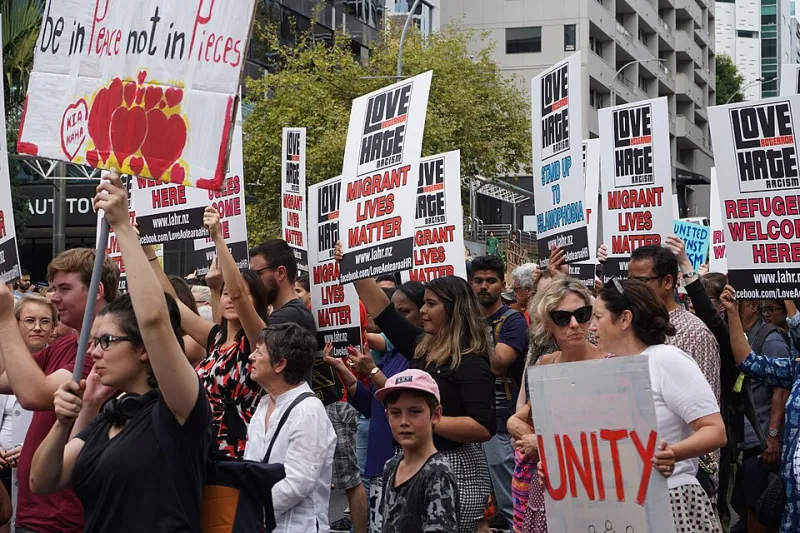
Photo: Thomas Le Bas, CC BY-SA 4.0, via Wikimedia Commons
In the summer of 2020, the streets of American cities were loud. Chants echoed off buildings. Speeches crackled through megaphones. The audio of a movement in full force — raw, urgent, and unmistakably human — filled the air and, inevitably, found its way onto the internet in thousands of recordings.
Some of those recordings ended up in DAWs.
What's been happening in underground electronic music over the past few years isn't subtle, but it is complicated. Producers are sampling protest chants, civil rights speeches, activist rallying cries, and moments of collective political action — and building them into tracks designed for dark rooms, loud speakers, and bodies in motion. The results range from genuinely powerful to deeply questionable, and the conversation around it is long overdue.
The Tradition Behind the Trend
Let's be clear: this isn't new. Political speech has been in the DNA of Black American music — and by extension, electronic music — for a long time. Public Enemy built a sonic philosophy around it. Techno's Detroit origins were inseparable from the political and economic realities of that city. House music carried the voices of communities that mainstream culture was actively ignoring.
What's different now is the speed and the volume. Digital tools make it trivially easy to grab audio from a livestream, clean it up, and drop it into a session. The internet has created an enormous, constantly updating archive of political moments. And the appetite among certain corners of the electronic music community for content that feels urgent and real has never been higher.
"There's something about a chant that's already rhythmic," says DJ and producer Nadia Osei, who's based in Atlanta and has been watching this trend closely. "A crowd finding a unified voice — that has tempo, that has dynamics. It's not that far from a kick drum pattern. Producers hear that."
What's Actually Being Made
The range of work in this space is genuinely wide. On one end, you have artists who are building tracks that feel like political statements in their own right — where the sampled material is the point, where the context is preserved, and where the music functions almost like an audio documentary. These are tracks that make you feel the weight of what you're hearing, even as the bass is moving through you.
On the other end, you have records where a chant or a speech fragment has been so thoroughly processed — pitched, chopped, filtered, looped — that its origin is basically invisible. The political content has become pure texture, pure energy. Whether that's a problem depends enormously on who you ask.
Producer and activist Damon Cruz, who releases music under the name Tierra Roja from Los Angeles, has spent years working in both spaces and is thoughtful about the distinction. "When I sample a chant from a march I was actually at, I feel like I'm documenting something," he says. "I'm saying, this moment existed, this energy was real. But when I hear a producer who was nowhere near any of this chopping up the same audio for a peak-time banger, I have questions."
The Ethics Are Genuinely Complicated
The ethical terrain here is messy in ways that go beyond the usual sampling debates. Political speech, protest audio, and movement recordings raise specific questions that a drum loop from a soul record simply doesn't.
Who owns a chant that hundreds of people created together in a public space? What does it mean to take someone's most urgent political expression and route it through a context — a club, a festival, a streaming playlist — where the political stakes are essentially zero? Is that amplification or appropriation?
There's also the question of who's doing the sampling. When artists who are themselves part of the movements being referenced make this music, the dynamic is different than when they're not. This isn't a clean binary — identity doesn't automatically confer artistic license — but it's a variable that matters to a lot of people in the conversation.
"I think about consent a lot," says Osei. "Not in a legal sense necessarily, but in a real sense. The person whose voice is in that recording — do they know their words are now in a track being played at a festival? Would they be okay with that? Would they feel like it served something?"
Some producers are trying to navigate this by working directly with activists and organizations, sharing revenue or building tracks in genuine collaboration with movement spaces. It's not widespread yet, but it's a model that's gaining attention.
When It Works
For all the complexity, there are examples of this practice producing something genuinely remarkable. Tracks that make you feel the weight of history while simultaneously making you want to move. Music that carries real political content into spaces — clubs, raves, underground parties — where that content might otherwise never land.
There's an argument that dance music has always functioned as a form of collective processing. You go to a rave to feel something together. When the audio feeding that experience carries the voice of a movement, something different can happen — a kind of embodied political memory that purely cerebral engagement doesn't produce.
"I've been in rooms where a track comes on and it's got a chant in it from something people in that room actually lived through," says Cruz. "The reaction is different. It's not just dancing. There's recognition, there's grief, there's energy. That's not nothing. That's actually something music can do that very little else can."
The Question That Won't Go Away
But the uncomfortable question persists: does the dance floor context serve the message, or does it dissolve it?
When a rallying cry becomes a hook, when a speech fragment becomes a drop, the transformation is real. The music takes on the emotional charge of the source material, but the source material also takes on the associations of the music — which include escapism, hedonism, and a pretty radical decontextualization from the street, the march, the moment of genuine risk.
There's no single answer to that. Different tracks, different contexts, different intentions produce different outcomes. What's clear is that producers working in this space carry a responsibility that purely fictional or abstract source material doesn't demand.
Osei puts it plainly: "If you're going to use someone's fight as your fuel, you better know whose fight it was. And you better ask yourself what you're actually doing with it."
The beat drops either way. The question is what it means when it does.