All Rise: Why Producers Are Sampling the Courtroom and It's Working
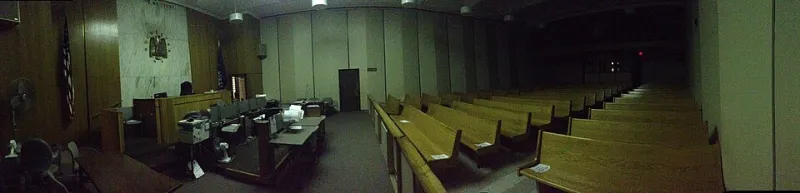
Photo: Bjengles3, CC BY-SA 4.0, via Wikimedia Commons
Somewhere between a gavel drop and a prosecutor's monotone recitation of charges, there's a beat. Not a metaphorical one — an actual, sampleable, chop-and-flip beat. A growing number of electronic producers have figured this out, and the results are genuinely surprising.
Courtroom audio — the real stuff, pulled from public trial recordings, depositions, congressional hearings, and decades of televised legal drama — is having an unexpected moment in underground production circles. The material is everywhere, it's free, it's soaked in genuine human tension, and it sounds like nothing else in a sample library. That combination is proving to be irresistible.
The Source Material Is Hiding in Plain Sight
American legal proceedings have a long tradition of public access. Federal court recordings, state trial archives, congressional hearing transcripts with associated audio — enormous amounts of this material exist in the public domain or under open-access rules. For producers who know where to look, it's essentially an infinite, constantly updating library of raw vocal content.
Beyond the strictly official sources, there's an entire ecosystem of legal drama that's been broadcast into American living rooms for decades. Judge Judy Sheindlin's iconic delivery — clipped, impatient, cutting — has been memed and remixed informally for years. The 1995 O.J. Simpson trial produced some of the most-watched television in American history and an audio record that still resonates. More recently, the Johnny Depp and Amber Heard defamation trial became a kind of real-time cultural event, generating thousands of clips that circulated across every platform simultaneously.
Producers working in this space aren't necessarily reaching for the most famous moments. Often, it's the mundane texture that draws them in — the way a court reporter's voice flattens into pure procedural rhythm, the ambient sound of a room full of people trying to be quiet, the specific acoustic signature of a wood-paneled chamber built for solemnity.
What Bureaucratic Language Actually Sounds Like in a Mix
There's a reason legal language hits differently than conventional vocal samples. It's constructed to be precise, stripped of ambiguity, and delivered with a kind of enforced neutrality that creates its own tension. When you pull a phrase like "the record will reflect" or "objection, your honor" out of context and drop it into a four-on-the-floor arrangement, something genuinely strange happens to the meaning.
A Los Angeles-based producer who works under the alias Voir Dire has been building tracks around deposition audio for the past couple of years. "Depositions are incredible because nobody's performing," she explained. "It's just people under oath, stressed out of their minds, trying to say the exact right thing. That kind of controlled tension is really hard to fake. You can hear it in the breathing."
That observation gets at something real about why this material works sonically. Courtroom recordings capture people in moments of genuine stakes — not the performed stakes of a reality show confrontation, but situations where the outcome actually matters to the people in the room. That authenticity translates directly into audio texture, even when the words themselves are stripped away and used purely as rhythmic or melodic elements.
The Legal Gray Area Nobody Wants to Talk About
Here's where things get complicated, and it's worth being honest about it. The legal landscape around sampling — even from public domain sources — is genuinely murky, and courtroom audio introduces some specific wrinkles that producers should understand before going deep.
Federal court recordings and congressional proceedings are generally considered public domain under U.S. copyright law. State court rules vary significantly. Broadcast footage from televised legal proceedings — your Judge Judy clips, your Court TV archives — is a different matter entirely. Those recordings are owned by production companies and networks, and using them without clearance puts you in the same position as sampling a commercial record.
The viral clip problem is even trickier. A moment from the Depp-Heard trial that got clipped by a news organization and spread across social media exists in a weird legal space where the underlying proceeding may be public, but the specific recording might carry its own rights. Producers who've been doing this for a while tend to lean hard on primary sources — official court archives, C-SPAN, government-published recordings — and stay away from anything that passed through a commercial broadcast first.
There's also a separate ethical conversation happening in these communities about whose voices get sampled and in what context. Using a defendant's testimony as a loop has different implications than using a judge's procedural language. Most producers working thoughtfully in this space have thought about that distinction, even if they don't all land in the same place.
Atmosphere Beyond the Vocals
It's not just the words. Some of the most interesting work being done with courtroom audio isn't vocal-forward at all — it's about the room itself. The specific reverb of a formal chamber. The shuffle of papers. The low-frequency hum of HVAC systems in government buildings. The sound of a gavel, which turns out to be one of the more versatile percussive samples you'll ever find.
An experimental ambient producer based in Portland described building an entire 20-minute piece around the background audio from a 1970s congressional hearing — not any of the testimony, just the room noise, the microphone hiss, the occasional cough. "It sounds like being inside a decision," he said. "Like something important is about to happen and you're waiting for it. That feeling is almost impossible to manufacture synthetically."
This approach connects to a broader movement in experimental music toward what some producers call "institutional audio" — sounds captured in spaces designed for authority, governance, or judgment. Courtrooms are just one node in that network, alongside hospital waiting rooms, airport terminals, and government lobbies. These spaces have acoustic signatures that carry psychological weight, and producers are increasingly treating that weight as a compositional tool.
The Remix as Commentary
There's an argument — and plenty of producers making this material are making it explicitly — that remixing courtroom audio is a form of cultural criticism. The American legal system produces an enormous amount of theater, and that theater is built on language designed to obscure as much as it reveals. Pulling those words out of their original context and reframing them in a musical setting can expose the performance underneath the procedure.
When a jury verdict gets chopped and pitched down until it sounds like a horror movie drone, something gets said about the weight of that moment that straight documentary coverage can't quite capture. When a prosecutor's closing argument gets looped into a rhythm track, the rhetorical machinery becomes audible in a new way.
That's ultimately what makes this trend feel like more than a novelty. The courtroom isn't just a source of interesting sounds — it's one of the places where American society acts out its deepest tensions around guilt, power, and accountability. Bringing that material into a musical context doesn't resolve those tensions. It amplifies them. And right now, that resonance is exactly what a lot of listeners seem to be looking for.